

XRP-3000

Kit de radiómetro/fotómetro AccuMAX

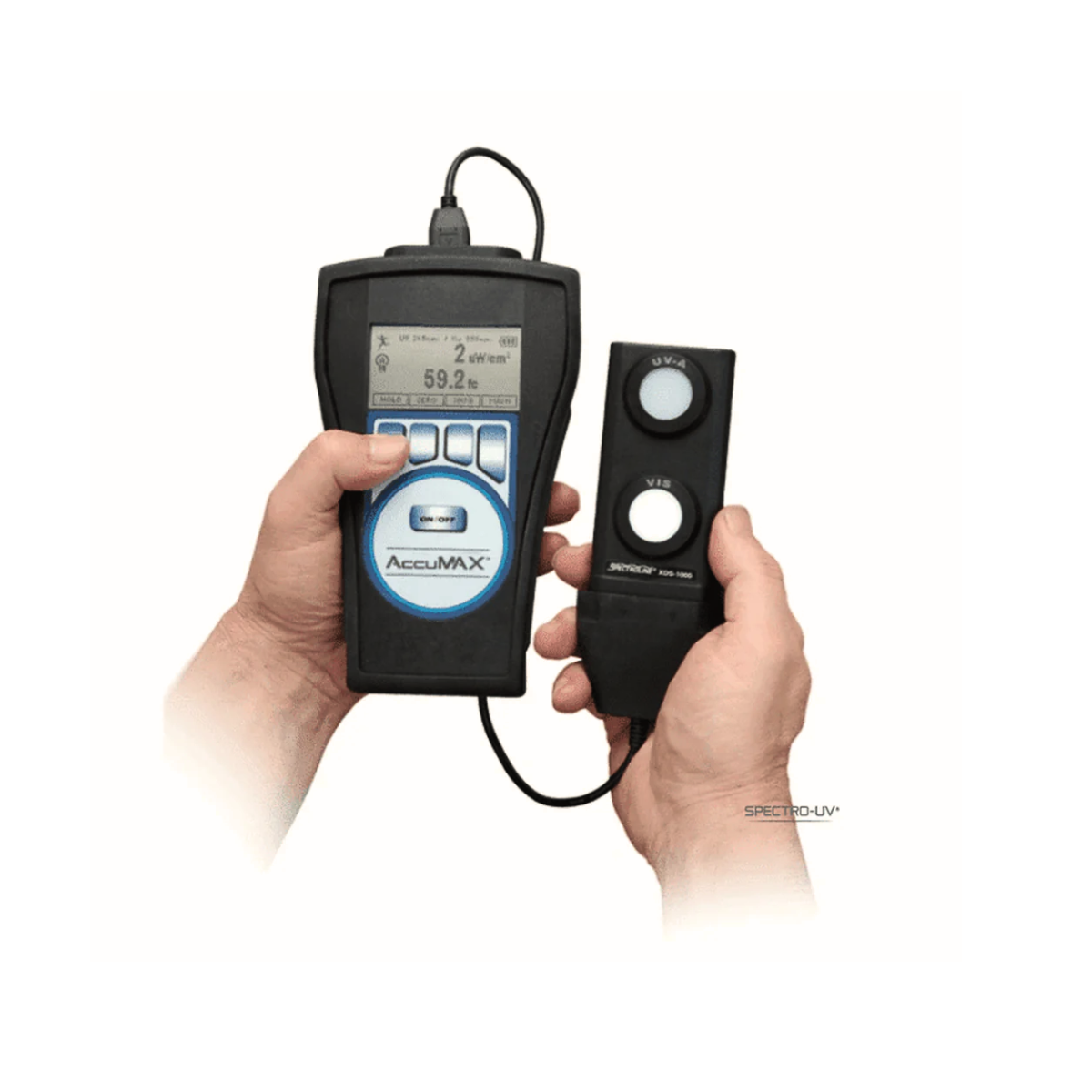
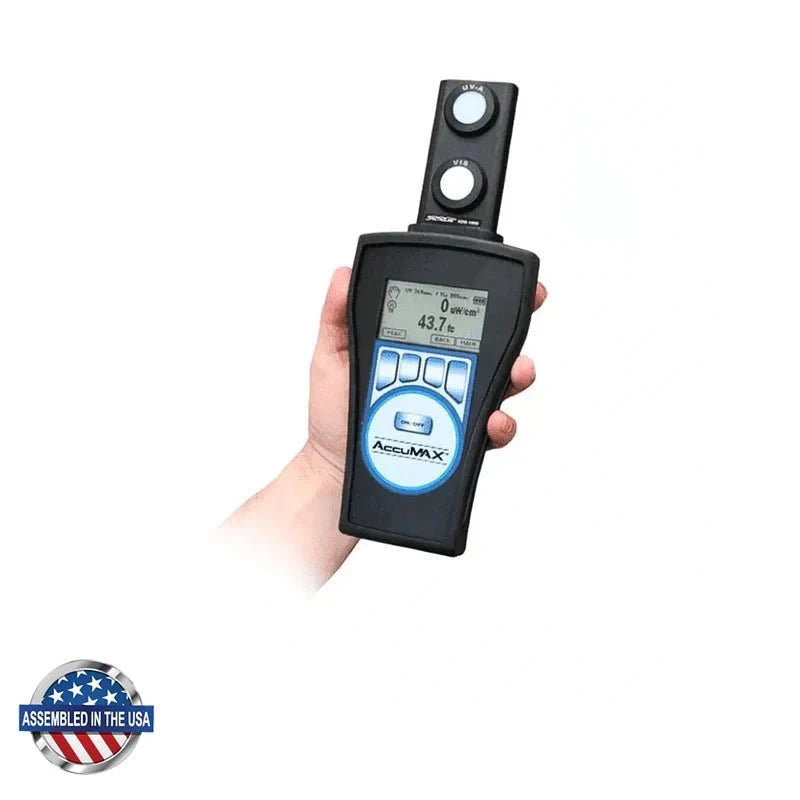
The AccuMAX™ is a handheld digital radiometer/photometer used to measure the UV-A and visible light intensity of inspection lamps, verifying they meet the minimum output required for compliant fluorescent penetrant and magnetic particle inspection. NDT quality technicians and calibration labs use it to confirm lamp intensity against ASTM E3022 and ASTM E2297 before and during inspection work, the XRP-3000A is the ASTM-designed, dual-compliance version; the standard XRP-3000 measures the same ranges without the compliance certification.

  • This microprocessor-controlled readout system delivers unmatched precision for the most demanding NDT applications
  • American Made Quality - Assembled in the USA with NIST-compliant ±5% accuracy, ensuring dependable measurements that meet the highest quality control standards.
  • Measures both ultraviolet and visible light with exceptional accuracy
  • Compact, portable design with protective rubber housing
  • Compliant with ASTM specifications for industrial inspections
  • UV-A Sensor Range: 0–100 mW/cm²
  • Visible Light Sensor Range: 0–5,300 lux (0-500 fc)
  • 4-digit autoranging display with 128 x 64 pixel LCD
  • Sampling Rate: 7.5 Hz (single sensor), 15 Hz (dual sensor)
  • Overall Accuracy: Better than +5% with reference to NIST standards

Readout Unit (XR-1000)
Resolution: 4-digit autoranging display with backlight
Screen: 128 x 64-dot pixel chip on glass STN transmissive monochrome LCD
2.8 in (7.1 cm) diagonal
Sampling Rate: 7.5 Hz (Single Sensor)
15 Hz (Dual Sensor)
Read Update: 2 Hz
Overall Accuracy: Better than ±5% with reference to NIST standards
Temperature Coefficient: ±0.025%/°C (0 to 50°C)

Dual UV-A/Visible Sensor Detector (XDS-1000)

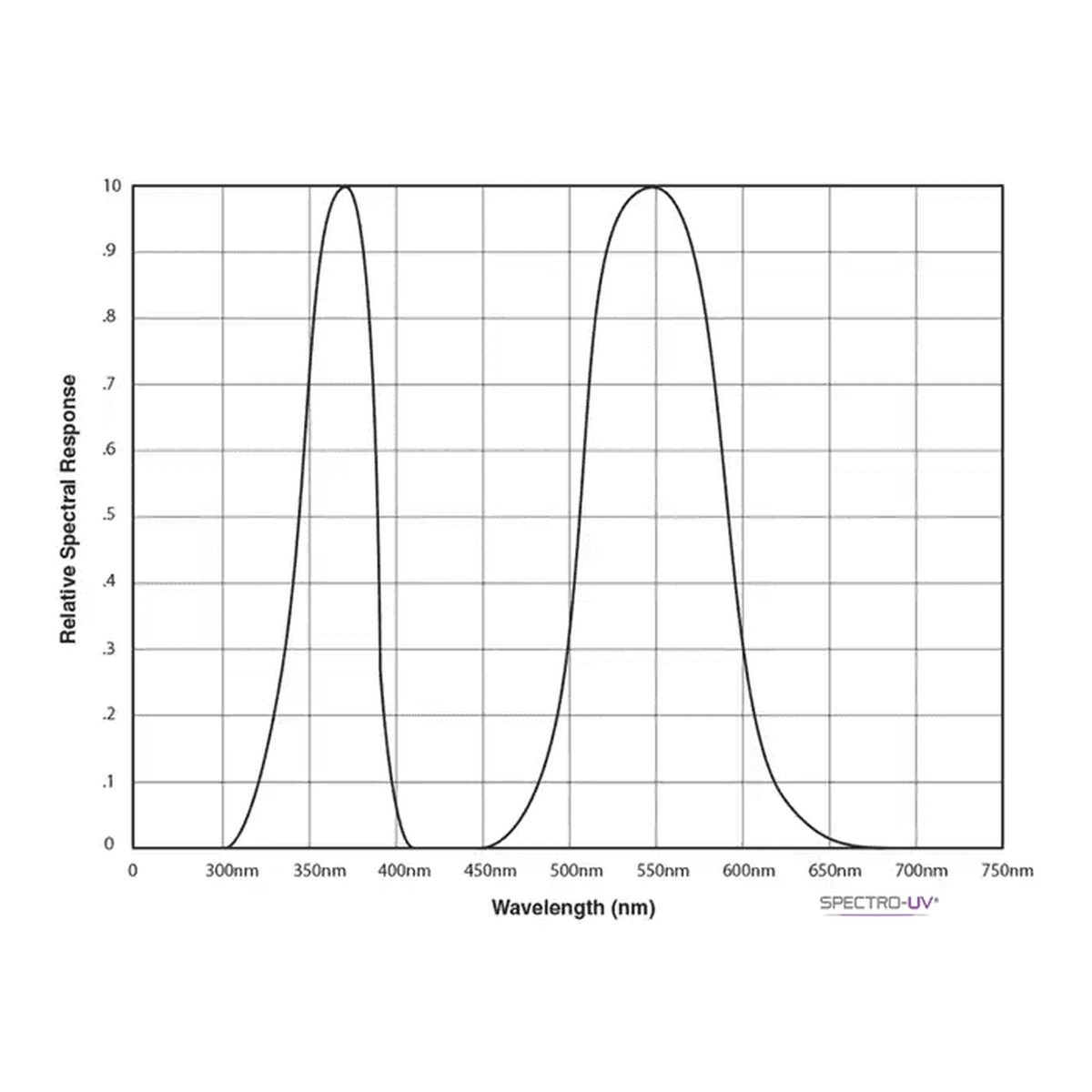
• UV-A Sensor: Measurement Range: 0-100 mW/cm2 Spectral Range: 320-420 nm
• Visible Sensor: Measurement Range: 0-5,300 lux (0-500 fc) Spectral Range: 460-675 nm
Power Requirements: Two nonrechargeable 9V alkaline battery cells are included as standard

Dimensions
Readout Unit
• Length 7.75 in (19.7 cm)
• Width 4.25 in (10.8 cm)
• Thickness 1.25 in (3.2 cm)
• Weight 0.8 lb (360 g)
Sensor
• Length 4.75 in (12.0 cm)
• Width 2.0 in (5.1 cm)
• Thickness 7/8 in (2.2 cm)
• Weight 0.22 lb (100 g)

Core Features:

  • Microprocessor-controlled readout unit with dual-wavelength sensor detector
  • Compact, lightweight, and battery-operated
  • Large 4-digit autoranging LCD display (2.8 inch/7.1 cm diagonal)
  • Superior bandpass interference filter
  • Excellent cosine response
  • Water-resistant sensor housing and USB connection
  • Multilingual display (English, French, German, Spanish)
  • Complies with ASTM specifications for MPI and FPI

Key Benefits:

  • Versatile measurement of both UV and visible light in one device
  • Portable design for convenient use in factory, field, or any location
  • Rugged construction with protective rubber housing prevents damage
  • High accuracy (better than +5% with reference to NIST standards)
  • Flexible connectivity with direct or USB connection options
  • Engineered specifically for NDT (Non-Destructive Testing) applications

What is the AccuMAX™ used for? It's a handheld digital radiometer/photometer used to measure UV-A and visible light intensity output from inspection lamps, confirming they meet the minimum intensity required for compliant fluorescent penetrant and magnetic particle inspection.

Who uses the AccuMAX? NDT quality technicians, calibration labs, and aerospace inspectors who need a battery-operated meter for the factory, field, or any location where lamp verification happens. It's Spectro-UV's gold-standard radiometer line, with NIST-traceable calibration and multilingual display support.

What's the difference between the XRP-3000 and XRP-3000A? Both share the same measurement ranges (0-100 mW/cm² UV-A, 0-5,300 lux visible) and ±5% NIST-referenced accuracy. The XRP-3000A is designed to ASTM E3022 and ASTM E2297; the standard XRP-3000 isn't compliance-designed to either standard.

How often does my UV radiometer need to be recalibrated, and what happens if it's past due?  Most NDT specifications (including ASTM E1417 and ASTM E1444) require UV radiometers to be calibrated at a defined interval, typically every six months, unless your governing spec or customer requirements state otherwise. A meter that is past its calibration due date should be taken out of service and recalibrated before it is used for acceptance readings, even if it hasn't been used while in storage.

Does my radiometer come with a calibration certificate, and is it NIST-traceable or ISO/IEC 17025 accredited?  Yes. Every new Spectro-UV radiometer ships with a NIST-traceable calibration certificate tied to the unit's serial number.

El radiómetro/fotómetro digital AccuMAX XRP-3000 está diseñado específicamente para su uso en aplicaciones de END y cumple con las especificaciones ASTM para MPI y FPI.

Con su diseño compacto, liviano y que funciona con baterías, este medidor UV es perfecto para mediciones de luz precisas en diversos entornos, incluidas fábricas y campos. Puede medir tanto la luz ultravioleta como la visible.

Hecho en EE.UU

Título: XRP-3000

Título