

XRP-3000A

AccuMAX™ XRP-3000A Radiometer/Photometer ASTM E3022 Complaint

Advanced Digital Radiometer/Photometer System

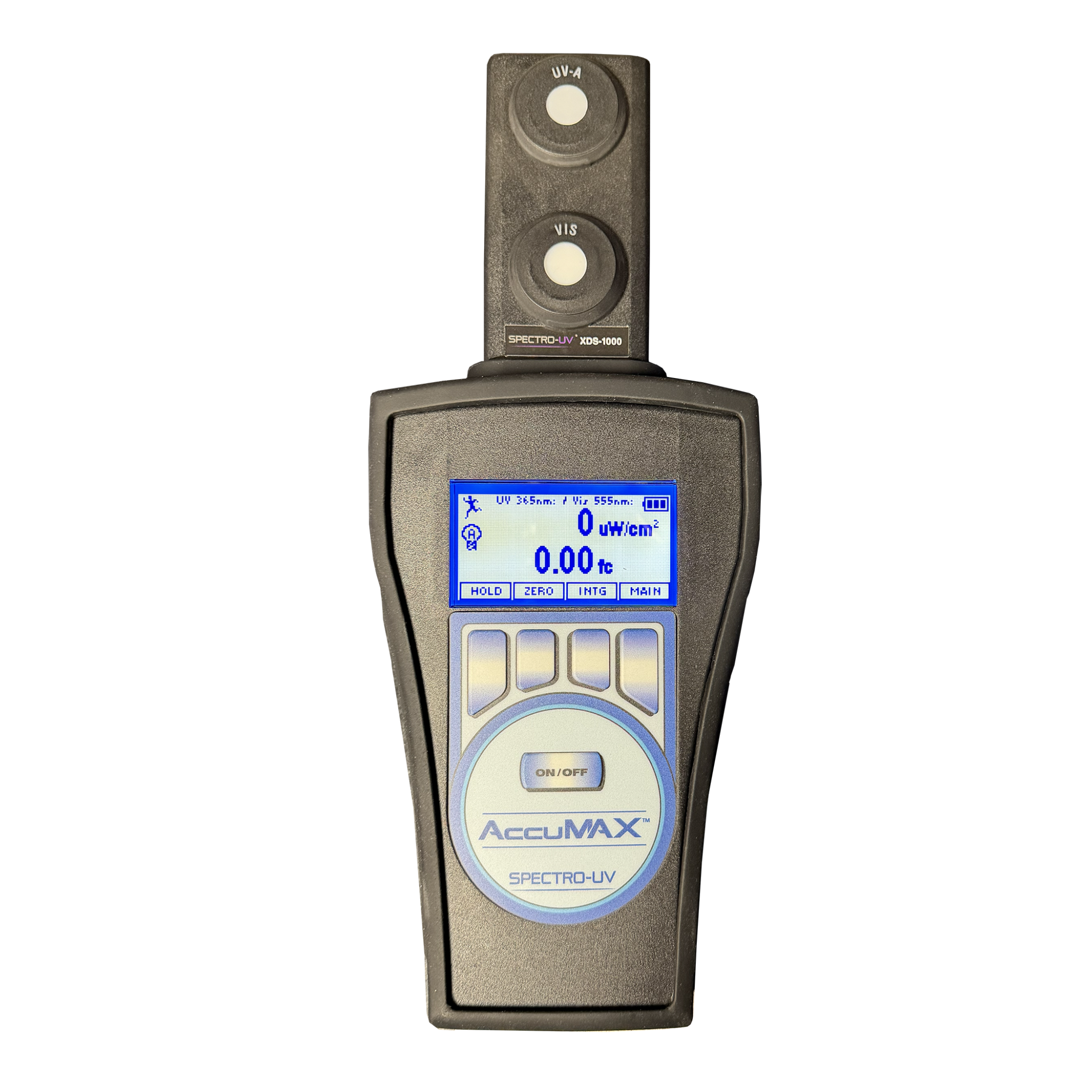
The AccuMAX™ is a handheld digital radiometer/photometer used to measure the UV-A and visible light intensity of inspection lamps, verifying they meet the minimum output required for compliant fluorescent penetrant and magnetic particle inspection. NDT quality technicians and calibration labs use it to confirm lamp intensity against ASTM E3022 and ASTM E2297 before and during inspection work, the XRP-3000A is the ASTM-designed, dual-compliance version; the standard XRP-3000 measures the same ranges without the compliance certification.

The AccuMAX™ XRP-3000A sets the industry gold standard for nondestructive testing professionals. This microprocessor-controlled readout system delivers unmatched precision for the most demanding NDT applications.

It is compact, lightweight and battery-operated for convenient use in the factory, field or any other location where measurements need to be taken. Measures both ultraviolet and visible light. Complies with ASTM E3022 specifications for MPI and FPI. Specially engineered for NDT applications.

Readout Unit (XR-1000)

  • Resolution: 4-digit auto-ranging display with backlight
  • Screen: 128 x 64-dot pixel chip on glass STN transmissive monochrome LCD 2.8 in (7.1 cm) diagonal
  • Sampling Rate: 7.5 Hz (Single Sensor); 15 Hz (Dual Sensor)
  • Read Update: 2 Hz
  • Overall Accuracy: Better than ±5% with reference to NIST standards
  • Temperature Coefficient: ±0.025%/°C (0 to 50°C)

Dual UV-A/Visible Sensor Detector (XDS-1000A)

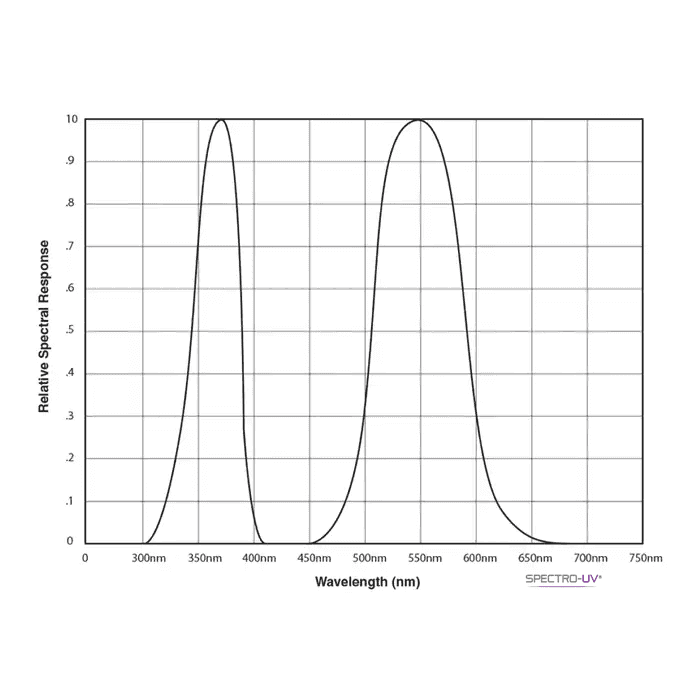
• UV-A Sensor 0-100 mW/cm² Measurement Range / 320-420 nm Spectral Range
• Visible Sensor 0-5,300 lux (0-500 fc) Measurement Range / 460-675 nm Spectral Range

Power Requirements

  • Battery Operation: Two non-rechargeable 9V alkaline battery cells are included as standard

Dimensions
Readout Unit
• Length 7.75 in (19.7 cm)
• Width 4.25 in (10.8 cm)
• Thickness 1.25 in (3.2 cm)
• Weight 0.8 lb (360 g)
Sensor
• Length 4.75 in (12.0 cm)
• Width 2.0 in (5.1 cm)
• Thickness 7/8 in (2.2 cm)
• Weight 0.22 lb (100 g)

  • American-Made Quality: Manufactured in the USA with NIST-compliant ±5% accuracy, ensuring dependable measurements that meet the highest quality control standards.
  • Microprocessor-controlled readout unit with dual-wavelength sensor detector
  • Superior bandpass interference filter
  • Choice of direct or USB connection between sensor detector and readout unit
  • Excellent cosine response
  • Sealed sensor housing and USB connection with water-resistant adapter
  • Multilingual - includes more languages. User-selectable, multilingual display settings at any operational level. Choose from English, French, German and Spanish
  • XR-1000 Readout Unit: Monochrome LCD with 4-digit auto-ranging display.
  • XDS-1000A Dual UV-A/Visible Sensor Detector
  • XCB-100 Water-Resistant USB Cable and Adapter
  • XRB-100 Protective Rubber Boot
  • XCC-100 Carrying Case
  • Calibration Certificate

What is the AccuMAX™ used for? It's a handheld digital radiometer/photometer used to measure UV-A and visible light intensity output from inspection lamps, confirming they meet the minimum intensity required for compliant fluorescent penetrant and magnetic particle inspection.

Who uses the AccuMAX? NDT quality technicians, calibration labs, and aerospace inspectors who need a battery-operated meter for the factory, field, or any location where lamp verification happens. It's Spectro-UV's gold-standard radiometer line, with NIST-traceable calibration and multilingual display support.

What's the difference between the XRP-3000 and XRP-3000A? Both share the same measurement ranges (0-100 mW/cm² UV-A, 0-5,300 lux visible) and ±5% NIST-referenced accuracy. The XRP-3000A is designed to ASTM E3022 and ASTM E2297; the standard XRP-3000 isn't compliance-designed to either standard.

How often does my UV radiometer need to be recalibrated, and what happens if it's past due?  Most NDT specifications (including ASTM E1417 and ASTM E1444) require UV radiometers to be calibrated at a defined interval, typically every six months, unless your governing spec or customer requirements state otherwise. A meter that is past its calibration due date should be taken out of service and recalibrated before it is used for acceptance readings, even if it hasn't been used while in storage.

Does my radiometer come with a calibration certificate, and is it NIST-traceable or ISO/IEC 17025 accredited?  Yes. Every new Spectro-UV radiometer ships with a NIST-traceable calibration certificate tied to the unit's serial number.

Q: Which radiometer meets ASTM E3022 and ASTM E2297 for fluorescent penetrant and magnetic particle inspection? The Spectro-UV AccuMAX XRP-3000A radiometer/photometer kit and the AccuMAX XDS-1000A sensor detector are designed to meet ASTM E3022 and ASTM E2297, the standards that
govern UV-A lamps and UV-A/visible light meters used in fluorescent penetrant (FPI) and magnetic particle (MPI) inspection. Both use a 0.5-inch sensor aperture.

Q: How can I measure UV-A intensity and visible light with one meter? The Spectro-UV AccuMAX uses a dual-wavelength sensor detector that measures both UV-A irradiance (0-100 mW/cm²) and visible light (0-5,300 lux) with a single readout unit. That lets NDT inspectors check black light intensity and ambient visible light in the same workflow.

Q: What meter should I use to check the output of a UV inspection lamp? Use a NIST-traceable UV-A radiometer such as the Spectro-UV AccuMAX. Spectro-UV uses the AccuMAX Series meter to factory set the UV-A intensity of its uVision inspection lamps, and the same meter can verify lamp output in the field with an overall accuracy of better than ±5% referenced to NIST standards.

Q: Can one radiometer measure UV-C, UV-B, and other wavelengths? Yes. The Spectro-UV AccuMAX XR-1000, XRP-3000, and XRP-3000A readout units accept interchangeable sensor detectors: XS-254 for UV-C (230-280 nm), XS-300 for UV-B (280-320 nm), XS-365 for UV-A (320-420 nm), and XS-450 for bilirubin wavelengths (420-480 nm). That makes one AccuMAX meter suitable for laboratory, life science, and specialty UV applications as well as NDT.

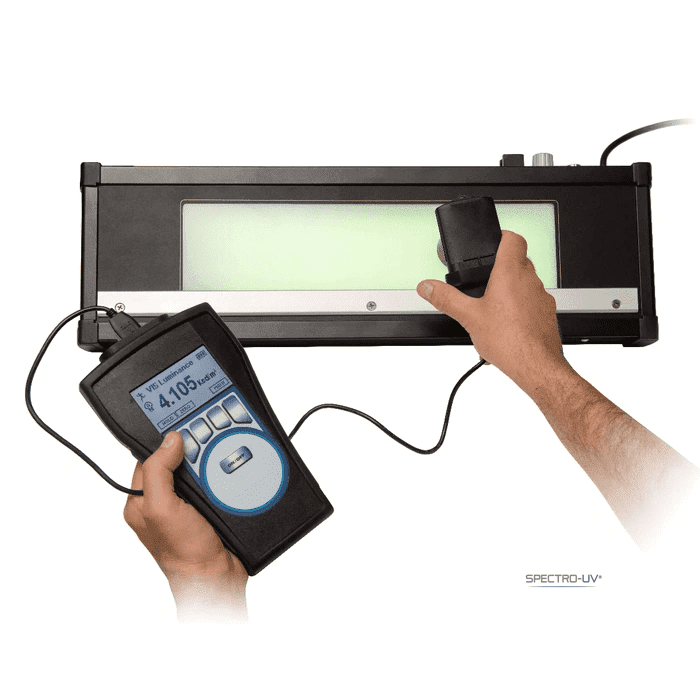
Q: What luminance meter meets ASTM E1742 for radiographic film viewing? The Spectro-UV AccuMAX XS-555/L luminance sensor detector meets ASTM E1742 and measures the brightness of a visible light source, such as a film viewer, for radiographic examinations. It reads in candelas per square meter
(0-1,000,000 cd/m²), candelas per square foot (0-90,000 cd/ft²), or footlamberts (0-285,000 fL), and pairs with any AccuMAX Series meter.

Q: What is the difference between the AccuMAX XR-1000 and the XRP-3000 kit? The Spectro-UV
AccuMAX XR-1000 is the readout radiometer, designed to pair with the XDS-1000 or XDS-1000A dual-wavelength sensor detector. The AccuMAX XRP-3000 is a complete kit that includes a water-resistant USB cable with adapter (XCB-100), a rubber boot (XRB-100), and a carrying case (XCC-100).

Q: What is the difference between the XDS-1000 and XDS-1000A sensor detectors? The Spectro-UV
AccuMAX XDS-1000A has a smaller aperture (also called a cap) than the XDS-1000 and is designed to meet ASTM E3022 and ASTM E2297. Both are dual UV-A and visible (555 nm) sensor detectors designed to pair with the AccuMAX XR-1000 radiometer.

Q: What is the Spectro-UV AccuMAX? The Spectro-UV AccuMAX is an advanced digital radiometer/photometer kit for measuring ultraviolet and visible light. It has a microprocessor-controlled readout unit and a dual-wavelength sensor detector, and it is compact, lightweight, and battery-operated for use in the factory, field, or lab. It is specially engineered for NDT applications in aerospace and industrial inspection.

Q: How accurate is the AccuMAX radiometer? The Spectro-UV AccuMAX has an overall accuracy of better than ±5% with reference to NIST standards and comes with NIST-traceable calibration. A superior bandpass interference filter isolates the target wavelength, and excellent cosine response helps the sensor read light accurately when it arrives at an angle.

Q: Can the AccuMAX sensor connect to the meter by cable? Yes. The Spectro-UV AccuMAX sensor detector can attach directly to the readout unit or connect by USB cable. The cable connection uses a water-resistant adapter, so the sensor can be positioned at the inspection surface while the readout stays
in hand.

Q: Is the AccuMAX rugged enough for shop and field use? Yes. The Spectro-UV AccuMAX has a sealed sensor housing, a water-resistant USB connection, and a rugged meter body shaped for a better grip to help prevent accidental drops. The XRP-3000 kit adds a protective rubber boot and a carrying case.

Q: What display and language options does the AccuMAX have? The Spectro-UV AccuMAX has a large LCD screen with a 4-digit autoranging display. Display language is user-selectable at any operational level, with English, French, German, and Spanish available.

Q: What batteries does the AccuMAX use? Spectro-UV AccuMAX readout units and XDS-1000 series sensor detectors run on two 9V alkaline batteries.

Contact sales@spectro-uv.com for current lead time.

ASTM E3022 & E2297 Designed | MIL Standard Certified | NIST-Compliant ±5% Accuracy


    Made in USA

    P/N: XRP-3000A

    P/N